

NWU Open Educational Resources (OER) Fellowship
Your Music, Your Way: Grade 10 Interactive Music Module
Description of the project:
The CAPS Music curriculum for the Further Education and Training (FET) phase is divided into three streams: Western Art Music, Indigenous African Music, and Jazz (Department of Basic Education, 2011). Although schools choose which stream they want to focus on, learners can “mix the style of the chosen stream with a different style in the practical” (Department of Basic Education, 2011, p. 10) if they prefer. However, most South African schools offering Music as a subject at the FET level choose to focus on Western Art Music only since most teachers are Western-trained (Lategan, 2022; Msimango, 2023). Consequently, Indigenous African Music appears to be the stream that schools choose the least, in which teachers feel the least competent, and for which schools lack the most resources (Msimango, 2023). Therefore, South African FET Music is dominated by Western perspectives and pedagogy, while indigenous knowledge systems are underutilised. We, consequently, aim to address this gap by developing resources for Grade 10 Music teachers and learners focused on the content of Grade 10 Indigenous African Music. These resources will not only provide what is currently lacking but also encourage active engagement with curriculum content, while developing technological proficiency and celebrating indigenous knowledge systems. In addition, the resources will address multilingualism goals as they will be made available in isiZulu, Setswana, English, and Afrikaans.
This project proposes the development of an interactive digital Open Educational Resource (OER) that covers the first term of Grade 10 FET Music, with a specific focus on the Indigenous African Music stream. The resource will serve as a supplementary learning and teaching tool, providing accessible, engaging, and culturally relevant content to both learners and educators. Despite the inclusion of Indigenous African Music in the CAPS curriculum, a severe shortage of teaching materials remains that reflect the richness and diversity of Southern African musical traditions. This module aims to address that gap. We are starting with the first temr in Grade 10, since this will be the pilot programme for a larger, more expaned programme addressing the entire FET IAM stream.
The OER will take the form of an interactive module on Moodle, designed to go beyond static content. It will incorporate a mix of multimedia elements, including recorded performances, visual illustrations of instruments, audio quizzes, drag-and-drop activities, and formative assessments with immediate feedback. Learners will be able to navigate through sections independently, explore different traditions through story-based case studies, and test their understanding interactively. Teachers will benefit from downloadable lesson plans, printable worksheets, and access to customisable assessments.
The module will be multilingual, available in Afrikaans, English, Setswana, and isiZulu to reflect South Africa’s linguistic diversity and ensure broader accessibility. This multilingual approach supports learners’ comprehension and affirms the linguistic heritage that is often overlooked in mainstream music education.
Aligned with the CAPS Grade 10 FET Music curriculum, this OER ensures that both content and assessment practices directly support curriculum outcomes. This is necessary because the outcomes in the IAM stream are vaguely defined, and teachers, who are often trained primarily in Western art music, lack the experience and knowledge to interpret these outcomes effectively.
The School of Music and the Centre for Digital Humanities will collaborate to bring this project to life. This collaborative effort is necessary to ensure that the needs for digital infrastructure as well as subject knowledge and expertise are met. This interdisciplinary collaboration is essential not only for technical execution but also for realising a transformative, accessible, and contextually grounded educational resource that can be shared freely and adapted by schools across South Africa.

Principal Investigator:
Prof Ewie Erasmus
Co-Principal Investigator:
Prof Janelize Morelli
Project Title: Digital competencies and training needs for learning technology integration among North-West University lecturers
Project summary:
A significant shift in education has occurred due to the prominent role of ICT in institutions. However, literature has established that this integration has often lacked corresponding capacity development programmes for instructors. Even where attempts for capacity development exist, this problem is compounded by the fact that while the expectation for lecturers in higher education institutions to integrate digital technologies into the curriculum is increasingly recognised, there appears to be no consensus on the specific competencies that higher education lecturers must possess to accomplish this objective. The central problem addressed in this inquiry is the need to identify specific training needs required by NWU FHUM teaching staff to develop the competencies essential for effectively integrating technology into their teaching practice. Capacitating academics with digital competency skills is imperative for NWU to uphold its commitment to blended learning.
The purpose of this study is to identify training needs of and develop capacity enhancement interventions for North-West University (NWU) Faculty of Humanities (FHUM) lecturers to develop and apply digital competencies required for the effective integration of technology in the workplace.
In alignment with NWU's initiatives, Teach-In-Touch commenced in 2022. This is the name of a community of practice in the NWU FHUM. Recently, the organising committee of Teach-in-Touch has embarked on this project to generate scholarship aimed at informing the application of digital technologies in the FHUM. As part of this process, the proposed study is a multiple-phase and mixed-method action research (AR) aimed at identifying competency gaps and designing and implementing targeted interventions to enhance lecturers' digital competencies. Through AR methodology, the study will pursue four research questions and objectives aimed at:
- Exploring digital competencies among lecturers in the faculty,
- Drawing insights from the survey to determine their training needs and identify or design continuous professional development (CPD) program/s to address the competencies gap,
- Implementing the designed program/s, and evaluating the effectiveness of the program/s.
Principal Investigator:
Kristien Andrianatos
Kristien Andrianatos is a dedicated online educator and researcher. She facilitates the Academic Literacy Development modules for distance students at the North-West University. Read more
Kristien Andrianatos
Kristien Andrianatos is a dedicated online educator and researcher. She facilitates the Academic Literacy Development modules for distance students at the North-West University. These are cross-faculty, fully asynchronous courses. Her work centers on assisting students with academic acculturation and equipping them with the academic skills they need to succeed in higher education. She is an active member of a community of practice focused on innovative teaching and learning with technology. Her research interests include reading comprehension, mixed methods research, digital competencies, and the effective integration of online tools in higher education contexts. Driven by a commitment to accessible, high-impact learning, she continuously explores new ways to enhance teaching through technology for meaningful academic engagement in online environments.
Profile links:


Co-Principal Investigators
Prof Mariska Nel
Prof. Mariska Nel is an Associate Professor in Academic Literacy at the North-West University...read more
Prof. Mariska Nel
Prof. Mariska Nel is an Associate Professor in Academic Literacy at the North-West University. Her research is focused on integrating technological advances into higher education, with a specific emphasis on academic literacy. This includes several key areas such as HyFlex (multimodal) teaching and learning, online content development, effective electronic feedback, fostering student success through acculturation, and the integration of artificial intelligence and digital literacy into academic pedagogies. She is enthusiastic about any technology that can enhance the teaching and learning process and is committed to exploring its practical applications.
Dr Musara Lubombo
Dr Musara Lubombo is a Senior Lecturer and Subject Group Chairperson in the School of Communication at North-West University’s Mahikeng Campus...read more
Dr Musara Lubombo
Dr Musara Lubombo is a Senior Lecturer and Subject Group Chairperson in the School of Communication at North-West University’s Mahikeng Campus. His research focuses on the Scholarship of Teaching and Learning (SoTL), digital pedagogy, development and health communication, and instructional communication. He serves on Teach n Touch, a Faculty of Humanities initiative that promotes the use of digital technologies in higher education. His current work examines how digital platforms can support participatory pedagogy and inclusive knowledge-making. He has published and supervised Master’s and PhD students in these areas. 📞 +27 18 389 2363 📧 Musara.Lubombo@nwu.ac.za 📍 Building A3, Block C, Room 104 Qualifications
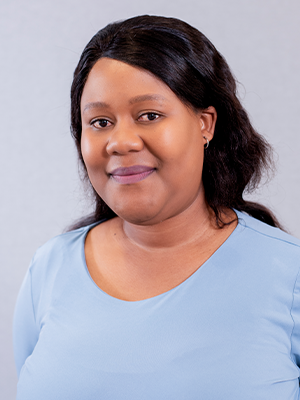
Mimi Nokuthula Masango
Mimi Nokuthula Masango holds an undergraduate qualification is in Language Practice and a Master’s Degree in Sociolinguistics. She is currently an Academic Literacy (ALDE) lecturer in the School of Languages at the North West University’s Mahikeng campus...read more
Mimi Nokuthula Masango
Targeting inflammation to improve health and immune function
Mimi Nokuthula Masango holds an undergraduate qualification in Language Practice and a Master’s Degree in Sociolinguistics. She is currently an Academic Literacy (ALDE) lecturer in the School of Languages at the North West University’s Mahikeng campus. Her career in higher education spans 11 years. Before joining NWU, she was with Tshwane University of Technology in Pretoria, where she was a lecturer for modules Language Dynamics, Applied English, and Language Editing. Besides being an educator, she is also passionate about teaching and learning, planning and coordination, and was the Teaching and Learning Coordinator in the Faculty of Humanities for 3 years. Her main research interest is in Sociolinguistics with a focus on minority languages in South Africa, particularly isiNdebele. She has co-authored a book chapter on Sindebele (the variation of isiNdebele used in the Limpopo province). Beyond minority languages, her research interests also include language shift and maintenance, language use, language contact, multilingualism, and academic literacy. She has presented at various conferences, including the South African Association for Academic Literacy Practitioners, the International Association for Minority Language Media Research (IAMLMR) 2024 Conference, and most recently the 13th International Conference on Third Language Acquisition and Multilingualism at the University of Groningen in the Netherlands.
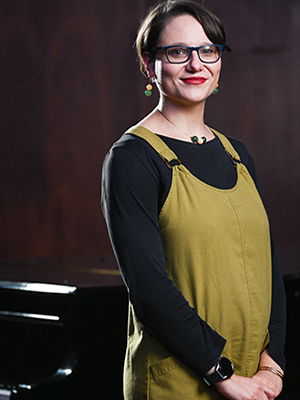
Prof Janelize Morelli
Janelize Morelli (PhD) is an associate professor in music at North-West University and the director of the NWU Centre for Digital Humanities...read more
Prof Janelize Morelli
Prof Janelize Morelli is an associate professor of community music at the North-West University and a member of the MASARA research entity. She teaches undergraduate modules in community music and music education. Janelize supervises postgraduate students interested in transformative music education and community music. Her research interests include an ethic of care and post-human music education.