
Communique: AGoPA, 1st International Conference, 2024
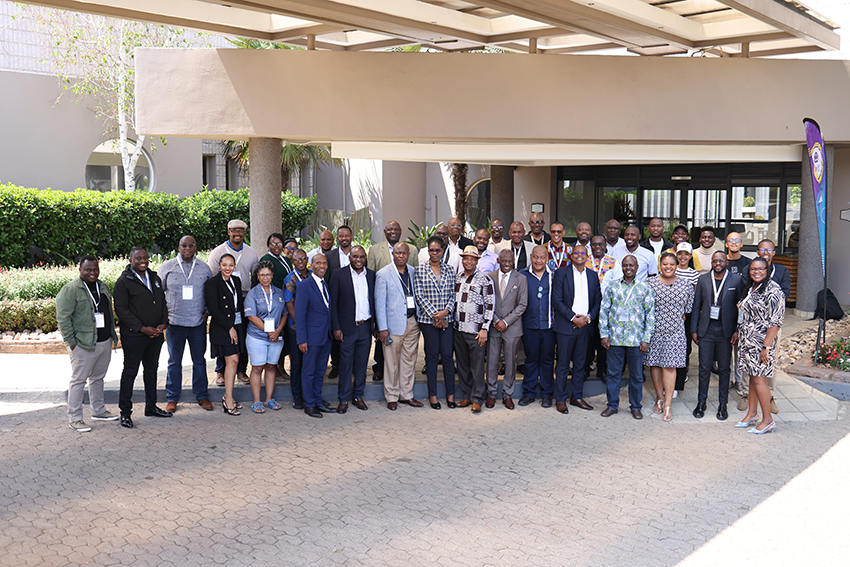
The Afrocentric Governance of Public Affairs (AGOPA) research entity, at the North-West University, held a successful two-day International Conference at Riverside Sun Hotel in Vanderbijlpark, Gauteng, South Africa, from 10th to the 11th of October 2024. The main theme of the conference was “Reflections on Afrocentric Governance in the 21st Century: Defiers of Advances, Dilemmas of Prospects".
The conference was graced by the presence of high-profile individuals involved in public affairs such as Prof John Nakabago, President of the African Association for Public Administration and Management (AAPAM) (Chief Guest), Mr Dumisani Hlophe, the Deputy Director-General of the DPSA, Prof Happy Kayuni, the Executive Dean, School of Law, Economics and Governance, University of Malawi, Dr Caiphus Chekwoti, Head of Trade Policy Training Centre in Africa, at Eastern and Southern African Management Institute, Dr Patricia Achan Okiria, deputy Inspector General of the Government of Uganda, Prof Samuel Chasukwa, University of Malawi and Dr Innocent Nuwagaba, Uganda Management Institute, among others.
Conference delegates were welcomed by Senior Management of the NWU namely Prof Jeffrey Mphahlele, Deputy Vice-Chancellor: Research and Innovation and Prof Sibusiso Chalufu, the Deputy Vice-Chancellor: Planning and Campus Operations (Vanderbijlpark Campus). Representing the Faculty of Humanities, Prof Costa Hofisi, research director of AGoPA, received delegates and explained the significance of hosting the conference. Prof Hofisi challenged the attending scholars to interrogate the goals of Afrocentric governance and functional integrated governance policy by examining the intricately linked pillars of Afrocentric principles and impactful governance in Africa.
The Conference had over 60 attendees and presenters from local and international universities on the African continent, as well as public and government institutions within and across the borders of South Africa. A total number of sixty-four (64) research articles were scheduled for presentation. A packed and exciting conference programme included breakaway presentations and discussions; a panel discussion on day one about Afrocentric Governance in a changing world: challenges and opportunities as well as a PhD seminar on scientific writing which was well attended. Day two comprised an insightful keynote address by the DDG of the DPSA, a panel discussion titled, Thinking about Coalition Governance: challenges and opportunities, breakaway presentations and discussions and the official closing where highlights of the conference were ruminated and closing remarks were delivered.
Following a successful 1st International Conference of the Afrocentric Governance of Public Affairs (AGoPA), the recommendations that followed can be summarised as follows:
There is a need for African leaders and government to channel efforts to identifying African values and ideals that can promote Afrocentric governance in the 21st century.
There should be more emphasis on the de-colonisation of educational curriculum across universities in Africa and its revision to enhance African values and philosophy, which in the long run, would constitute the basis for African governance systems
African governments should not be quick to discard Euro-centric governance system, but they should blend it with the African model.
Strong political will and good leadership are critical in achieving Afrocentric governance in the 21st century Africa
Reconstructing and re-thinking of the African states in terms of critical examination of what the ‘state’ stands to gain from Afrocentric governance is instrumental to public accountability and good governance in Africa.
There is a need to rebuild the electioneering process in Africa along African values, cultures, and principles, in such a way that African leaders with exemplary track record of selfless public service ascend power.
African governments should be more endearing to digitalise Afrocentric governance systems.
Parliaments across African states should intensify legislation that promote Afrocentric governance.
African governments should partner religious bodies, civil society organisations, and non-governmental organisations in the execution of African values that can promote Afrocentric governance.
Lastly, for Africa to experience genuine Afrocentric governance in the 21st century, its philosophical viewpoint, strategies, and actions of its political leadership must seek and advance Africa's interests.
Appreciation
The Conference Convenors, Local Organising Committee, and the Faculty of Humanities, NWU would like to express profound gratitude to all the guests who attended and participated at the 1st International Conference of the Afrocentric Governance of Public Affairs (AGoPA), South Africa. Your insightful research presentations were invaluable in making this inaugural event a resounding success. The exchange of ideas and knowledge sparked meaningful conversations that will continue to shape our collective work in the field.
We greatly appreciate the time, effort, and intellectual rigour you brought to the conference. Your contributions helped to create a dynamic and engaging environment, and we trust that you found the experience as enriching as we did.
We look forward to welcoming you again at our next conference in 2025 and continuing to collaborate in advancing research and discourse.
Professor Costa Hofisi
Director, AGOPA
Communique prepared by Prof Melvin Diedericks
NWU Trio Conference on Afrocentric Governance, Multilingualism ( African languages) and Transformation as pathways to sustainable development and social justice
OFFICIAL COMMUNIQUÉ
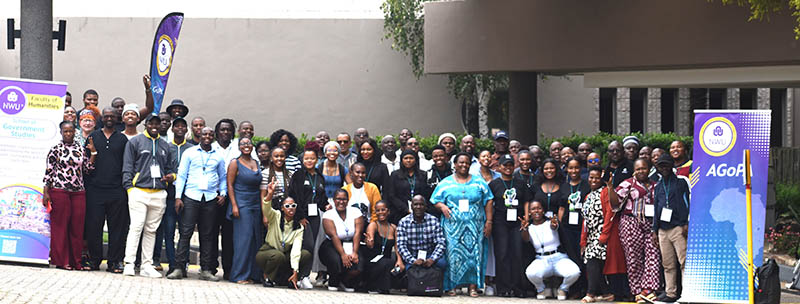
The North-West University (NWU), through its AGoPA Research Entity, School of Government Studies, School of Languages and the Language Directorate, successfully convened the NWU Trio Conference on Afrocentric Governance, Multilingualism, and Transformation as Pathways to Sustainable Development and Social Justice from 24th to 26th March, 2026 at the Riverside Sun Hotel in Vanderbijlpark, South Africa. The conference brought together a diverse assembly of scholars, practitioners, policymakers, civil society actors, and stakeholders from across Africa and beyond, creating a vibrant and intellectually rich platform for dialogue, reflection, and knowledge exchange. The central aim of the conference was to interrogate dominant governance paradigms while advancing Afrocentric approaches grounded in African epistemologies, multilingualism, and socio-cultural realities as essential pathways toward sustainable development and social justice.
The conference commenced on 24th March 2026, with registration, followed by a formal welcome address delivered by the Chairperson of the NWU Trio Conference. The opening remarks were presented by Prof. Jeffry Mphahlele, Deputy Vice-Chancellor for Research, Innovation, Postgraduate Studies and Community Engagement, who underscored the university’s commitment to research excellence and transformative scholarship that responds to societal needs. Prof. Mirna, Deputy Dean for Research and Innovation in the Faculty of Humanities, formally welcomed distinguished guests, including Advocate Melanchton Makobe, Acting Director-General; Dr. John Nakabago, President of the African Association for Public Administration and Management (AAPAM); Prof. Dumi Moyo, Executive Dean of the Faculty of Humanities; Prof. Ricky Mukonza; Dr. Rosa Kwatampora of the Uganda Management Institute; and representatives from the Office of the South African Presidency.
In his address, Dr. John Nakabago emphasized the urgency of re-centering African perspectives in governance discourse, arguing that the continent’s development must be anchored in its own intellectual traditions and institutional realities. The keynote address delivered by Advocate Melanchton Makobe, titled “Re-centering Africa: Afrocentric Governance and Multilingual Epistemologies as Foundations for Sustainable Development and Social Justice,” set a compelling tone for the conference. His address highlighted the importance of indigenous knowledge systems, inclusive governance frameworks, and linguistic diversity as critical foundations for equitable and sustainable development.
Proceedings on the second day, 25 March 2026, continued with remarks by Dr. John Nakabago, who acknowledged the presence of dignitaries, including Dr. David Kalaba from ESAMI in Tanzania, as well as conference organizers and participants. He reiterated the importance of strengthening collaboration between AAPAM and NWU and extended an invitation to participants to attend the 45th AAPAM Conference in Lesotho. The keynote address by Prof. Gerald Kagambirwe Karyeija, titled “Reconceptualising Governance through Afrocentric Paradigms: Advancing Sustainable Futures and Social Justice,” provided a critical reflection on the need to rethink governance systems in Africa. He argued that the realization of the aspirations of Agenda 2063 requires a deliberate shift away from inherited colonial administrative frameworks toward governance models rooted in African values, lived realities, and developmental priorities.
On the final day, 26 March 2026, the conference opened with remarks by Prof. Linda du Plessis, Deputy Vice-Chancellor for Teaching and Learning, who emphasized the significance of integrating Afrocentric perspectives into teaching, learning, and institutional transformation. The closing keynote address was delivered by Prof. Kgothatso Shai, President of the South African Association of Public Administration and Management (SAAPAM), who reflected on the interconnectedness of governance, multilingualism, and transformation. He underscored the importance of advancing excellence in public administration and the role of higher education institutions in cultivating responsive, ethical, and capable governance systems.
Across the three days, the conference engaged deeply with six (6) interrelated thematic areas, generating robust scholarly debate and practical insights. Central to these deliberations was the recognition that Afrocentric governance represents both a theoretical and practical framework for addressing Africa’s developmental challenges of which language is an important tool. Participants emphasized the need to move beyond Eurocentric governance models and to embrace systems grounded in African epistemologies, cultural values, and lived experiences. Afrocentric governance was thus framed as a necessary paradigm shift that prioritizes agency, self-definition, and the centering of African voices in decision-making processes.
This conference represented an important intellectual and practical platform to reimagine governance, knowledge systems, and development pathways through an Afrocentric lens in its six (6) sub-themes.
Afrocentric Governance and Sustainable Futures
The first theme, “Theorising Afrocentric Governance for Sustainable Development and Social Justice”, had paper presentations on how to rethink governance beyond inherited frameworks. It debated African epistemologies, values and lived realities in shaping systems that are equitable, inclusive, and sustainable. Afrocentric governance is not merely an academic concept. It was noted that it is a necessary paradigm shift for sustainable futures. The session therefore called for agency, self-definition, and the centring of African voices in decision-making processes that affect African futures.
Global Perspectives and African Futures
The theme “Global Perspectives and African Futures” reminded participants that Africa does not exist in isolation. Relevant papers were presented on how the global perspectives can shape the African futures. Our futures are interconnected with global systems, yet must not be subsumed by them. This session provided a space to critically engage these questions: How do we position African knowledge and innovation within global discourses without losing authenticity? How do we build partnerships that are equitable and mutually beneficial?
Multilingualism in Academic Spaces
Language remains central to inclusion, access, and epistemic justice. The session on “Multilingualism in Academic Spaces” hinged directly on the role of language in shaping who participates, who is heard, and whose knowledge counts. The paper presentations in this session therefore recognised that multilingualism is not a challenge to be managed, but a resource to be embraced. It is a bridge to deeper learning, broader participation, and more meaningful scholarship.
Equity, Social Justice, and Institutional Transformation
The sessions on “Afrocentric Governance, Equity, and Social Justice” and “Policy, Law, and Institutional Transformation” called for action by academics and students. Transformation must move beyond rhetoric. It must be reflected in our policies, institutional cultures, and everyday practices. It requires courage to confront historical injustices and commitment to building systems that are fair and just. As universities, we carry a responsibility not only to produce knowledge but to ensure that such knowledge contributes to societal transformation.
Technology, Innovation, and Multilingual Futures
The theme “Technology, Innovation, and Multilingual Futures” challenged conference attendees to think ahead. In an era defined by rapid technological advancement, we must ensure that innovation does not deepen existing inequalities. Instead, it should be harnessed to promote inclusion, preserve linguistic diversity, and expand access to knowledge. The conference raised questions on: How can technology serve as an enabler of Afrocentric futures rather than a force of homogenisation?
The conference further explored Africa’s position within global systems, highlighting the importance of engaging with global perspectives while preserving authenticity and autonomy. Participants reflected on the need for equitable and mutually beneficial partnerships that allow African knowledge and innovation to contribute meaningfully to global discourses without being subsumed by them. This engagement underscored the interconnectedness of global and local dynamics in shaping Africa’s developmental trajectory.
Overall impressions of the conference
A significant focus of the conference was the role of multilingualism in advancing epistemic justice and social inclusion. Discussions highlighted the persistent marginalization of African languages in education, governance, and knowledge production, noting that such marginalization perpetuates systemic inequalities. Participants strongly advocated for the integration of indigenous languages into academic, administrative, and policy spaces, emphasizing that multilingualism should be embraced as a resource that enhances access, participation, and meaningful scholarship. The adoption of multilingual practices and multilingual education was identified as a critical pathway toward achieving educational equity and broader social justice.
The conference also addressed issues of equity, social justice, and institutional transformation, calling for a shift from rhetorical commitments to concrete action. Participants emphasized the need for governance systems and institutional cultures that reflect principles of accountability, transparency, and inclusivity. It was noted that universities, as sites of knowledge production, bear a responsibility not only to generate knowledge but also to ensure that such knowledge contributes to societal transformation and addresses historical injustices.
Technology and innovation emerged as key enablers of sustainable development, with discussions focusing on digital governance, artificial intelligence, and data sovereignty. While recognizing the transformative potential of these tools, participants cautioned against the risk of deepening existing inequalities if access to technology remains uneven. The concept of Afrocentric digital governance was advanced as an approach that integrates technological innovation with indigenous knowledge systems and cultural values, ensuring that digital transformation is inclusive and contextually relevant.
The importance of citizen participation, youth engagement, and civil society involvement was consistently emphasized throughout the conference. Participants highlighted the role of community-based development, participatory governance, and inclusive policymaking in enhancing accountability and ensuring that development outcomes are responsive to the needs and aspirations of citizens. These approaches were identified as essential for building trust between state and non-state actors and for fostering sustainable and equitable development.
The conference identified several strategic pathways for advancing sustainable development and social justice in Africa. These include the institutionalization of Afrocentric governance systems grounded in indigenous knowledge and local ownership; the promotion of multilingualism and linguistic justice to enhance inclusivity and reduce epistemic inequalities; the strengthening of institutional capacity through accountability, transparency, and effective service delivery; the leveraging of technology and innovation in inclusive and context-sensitive ways; the localization of global development agendas such as the Sustainable Development Goals to align with African realities; and the fostering of multi-stakeholder partnerships that promote citizen participation and community empowerment.
The conference highlighted that strengthening state capacity in South Africa requires embedding Afrocentric governance grounded in indigenous knowledge, cultural relevance, and community participation. Government institutions must enhance accountability, transparency, and service delivery while aligning policies with local realities. Promoting multilingualism can improve access, inclusion, and citizen engagement. Capacity building should integrate technology and innovation in ways that bridge digital divides and support equitable development. Furthermore, fostering partnerships with civil society, academia, and communities is essential for responsive governance. Ultimately, a capable state must be adaptive, inclusive, and rooted in the socio-cultural context it serves. These highlights would be turned to a policy brief for South African Ministries, Departments and Agencies of government. In conclusion, the NWU Trio Conference affirmed that sustainable development and social justice in Africa require a holistic, inclusive, and context-sensitive approach that integrates governance reform, linguistic equity, technological innovation, and active citizen engagement. The conference underscored the importance of African intellectual leadership, collaborative research, and sustained dialogue in shaping the continent’s future. It called for continued engagement, policy development, and institutional commitment to realizing a just, equitable, and sustainable Africa.
Prof. Costa Hofisi
Chairman,
NWU Trio Conference Organizing Committee
North-West University
April, 2026