
Keynote Speakers
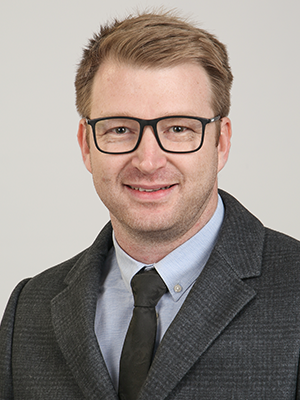
Dr Neil B. Barnard
From Curiosity to Contribution: Finding Your Place in Research
Short Bio
Dr Neil Barnard is a Senior Lecturer in the School of Industrial Psychology and Human Resource Management at the North-West University and Research Programme Leader of the Human Flourishing in Institutions programme within the Optentia Research Unit. He is a registered Industrial Psychologist whose research focuses on sustainable employability, mattering at work, and flourishing at work from a Capability Approach perspective. His work seeks to understand how people can thrive at work and how research can be used to address real-world challenges in organisations and society. Dr Barnard supervises postgraduate students, teaches research methodology, and publishes in the fields of industrial and organisational psychology. He is passionate about fostering curiosity and supporting emerging researchers in conducting meaningful research that contributes to individuals, organisations, and society.
Abstract
Research is often viewed as a means of completing a qualification, yet it also provides a way of asking meaningful questions, generating knowledge, and contributing to society. This keynote explores how curiosity has challenged long-held assumptions and led to important discoveries across fields such as sport, medicine, and psychology. It will discuss the role of research as a process of inquiry and scholarly conversation, while introducing key considerations for getting started with a research project, including asking meaningful questions, understanding one’s audience, and recognising the researcher's role in contributing to knowledge. The keynote will conclude by reflecting on the importance of purpose and a growth mindset in navigating the research journey and sustaining engagement.
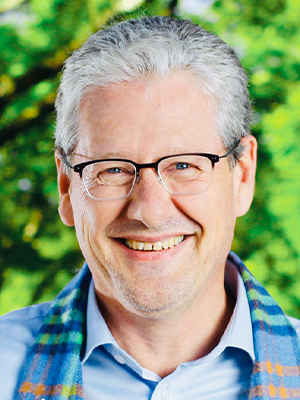
Prof. Anthonie Van Nieuwkerk
The democratic system in South Africa: is it fit for purpose?
The presentation will address four aspects of democracy: First, an exploration of democracy as a political and social construct anchored on three ideas. These are: democracy as a value, a process, and a practice. Second, an exploration of the competing understandings of democracy: electoral, liberal pseudo and development democracies. Third, a brief examination of the democracy-inequality paradox: how much inequality (and for how long) can a democracy tolerate before its foundations erode? Fourth, how is this relevant to South Africa whether democratic consolidation can be achieved.
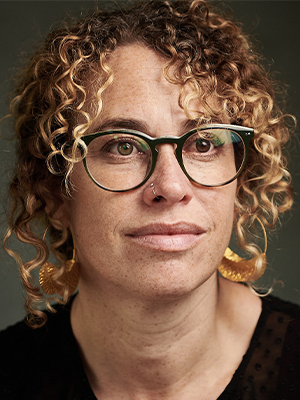
Prof. Nicky Falkof
Weaponised Identity, Demonised Diversity
Nicky Falkof is a Professor of Media Studies at Wits. She currently holds the NRF-DST SARChI Chair in Critical Diversity Studies and is the Director of the Wits Centre for Diversity Studies. Her books include The Devil Made Me Do It: Understanding Occult Crime in South Africa, Worrier State: Risk, Anxiety and Moral Panic in South Africa and Anxious Joburg: The Inner Lives of a Global South City.
Abstract:
Identity and diversity seem, at first glance, to be two sides of the same coin. After all, diversity and difference are fundamentally about identity: they are created by our social positioning and self-making in relation to commonly recognised features like race, gender, sexuality and ability. Nonetheless, the politics of identity often treat diversity as a threat rather than a source of strength, innovation and creativity. In this anxious mode of thought, identitarian homogeneity becomes an aspirational state: the world is seen as safer and more explicable when ‘we’ are all the same. In this lecture I will consider some of the broader manifestations and consequences of this anxious worldview. I will show how identity is weaponised, in some instances violently, to demonise and abject diversity, often to the benefit of elite actors. I will discuss three contemporary case studies: anti-African xenophobia in South Africa, the global attack on transgender rights and the myth of white genocide. In considering how identity is used as a weapon to dismiss both the social value of diversity and the individual humanity of scapegoated people, I will argue that a deep understanding of and commitment to diversity requires an intersectional feminist perspective that places the personal within the political.
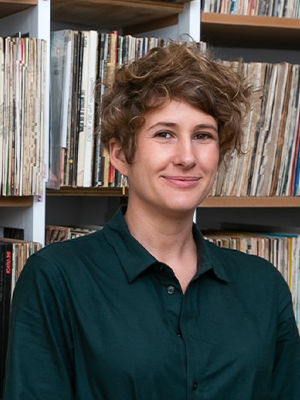
Dr Lizabé Lambrechts
Dr Lizabé Lambrechts
Dr Lizabé Lambrechts is a South African heritage practitioner, archivist, and musicologist. She is Executive Director of Nuuseum, a non-profit organisation dedicated to preserving and providing access to South Africa’s cultural heritage through large-scale digitisation, digital preservation, and online access initiatives. She also serves as an Extraordinary Associate Professor at the Africa Open Institute, where her work focuses on archives, memory, heritage, and digital humanities. Lambrechts previously led the Hidden Years Music Archive Project and served as Director of Archives at Africa Open. Her research and public-facing projects explore how archives can foster new forms of engagement, access, and knowledge production. She is currently the South African Research Director of Decay Without Mourning: Future Thinking Heritage Practices, an international research collaboration funded by the Riksbankens Jubileumsfond.
Dr Doris Viljoen
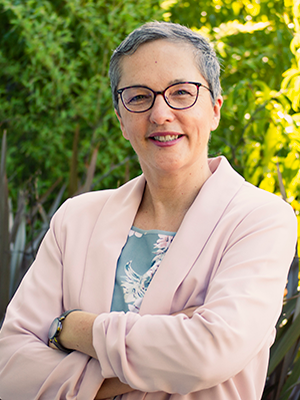
Dr Doris Viljoen
Dr Doris Viljoen is the Director of the Institute for Futures Research (IFR) and Programme Head for PGD and M Phil Futures Studies at the Stellenbosch Business School. At the IFR, she endeavours to interpret global as well as local trends and assess their relevance for South Africa and Africa. On the academic programmes, she teaches on environmental scanning, the application of foresight methodologies, scenario planning, organisational foresight, and strategy development. Before joining the IFR, Doris did consulting work on feasibility and location assessment studies for large capital projects and received the top student award on the M Phil Futures Studies programme. She has a wide range of research interests and is passionate about asking the right questions, searching for and finding relevant data as well as designing tools and techniques to facilitate thinking about plausible futures. She is well versed in multiple scenario planning techniques and has facilitated decision making teams through scenario exercises on topics ranging from infrastructure planning, higher education, tourism, and downstream metals beneficiation to the futures of work in South Africa. She also serves on the World Economic Forum’s Global Foresight Network.
Speakers
Dr Evaristus Adesina
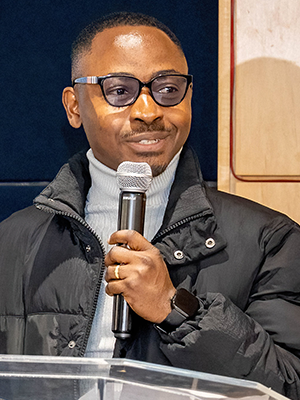
Dr Evaristus Adesina
Dr Evaristus Adesina is a Postdoctoral Fellow at North-West University, South Africa. His research examines health communication, indigenous language media, and artificial intelligence for social impact. His work has gained international recognition, with an h-index of 15 (Google Scholar), 12 (Scopus), and 8 (Web of Science).
Anneke Butler
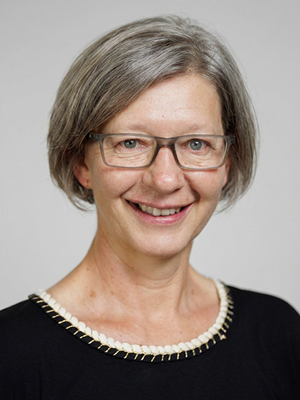
Anneke Butler
Anneke Butler is a lecturer in the School of Languages at the Vanderbijlpark Campus of the North-West University in the Subject Group: Critical and Analytical Thinking Skills (CATS). Her research straddles Descriptive Linguistics and Applied Linguistics. Within Descriptive Linguistics she is interested in cognitive linguistic approaches (especially Construction Grammar) and is currently investigating the copula and passive constructions. As an applied linguist, she regularly presents writing workshops for postgraduate students from different schools and entities at the NWU and she lectures Critical and Analytical Thinking where she also serves as the subject group leader.
Prof. Gustav Butler
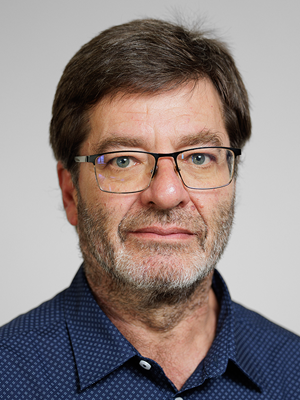
Prof. Gustav Butler

Dr Bryan Carter
Dr Bryan Carter
Dr Bryan Carter is Professor of Africana Studies and Director of the Center for Digital Humanities at the University of Arizona, where he oversees one of the only university-based volumetric capture stages in the American Southwest. He earned his Ph.D. from the University of Missouri-Columbia, and his work sits at the intersection of 20th-century African American literature, the Harlem Renaissance, Afrofuturism, and digital humanities.
He is best known for Virtual Harlem, a long-running immersive reconstruction of 1920s Jazz Age Harlem and one of the earliest sustained virtual reality projects in the humanities. At the Center for Digital Humanities, eighteen student developers from fields ranging from computer science to film, television, and media collaborate with him on projects in AR, VR, volumetric capture, 360 videography, and digital storytelling that treat Black cultural memory as something to be walked through and experienced rather than only read.
Dr Carter is the author of two books that anchor his scholarly contributions to the field. His first, Digital Humanities: Current Perspective, Practices, and Research (Emerald Group Publishing, 2013), appeared as Volume 7 of the Cutting-Edge Technologies in Higher Education series (ISBN 978-1-78190-688-0). His second, Afrofuturism and Digital Humanities: Show Me and I Will Engage Differently (Routledge, 2022), appeared in the Routledge Research in Digital Humanities series (ISBN 9781138603158) and introduces the field of Digital Africana Studies through detailed case studies of pedagogical practice. He recently served as Principal Investigator on a multi-million-dollar U.S. Department of Commerce broadband initiative, which concluded in January 2026, expanding internet access to underserved communities around the University of Arizona and its micro-campus sites.
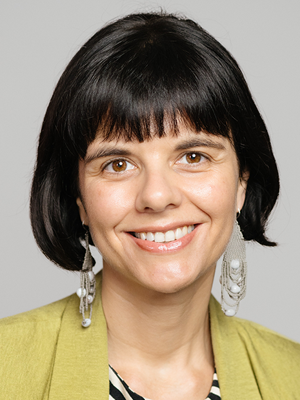
Dr Annemie Conradie-Chetty
Dr Annemie Conradie-Chetty
Annemi Conradie-Chetty is a lecturer, artist and researcher. She completed her PhD degrees in Visual Studies at Stellenbosch University and is the deputy director of the research focus area, Visual Art and Research and Creative Outputs in Visual Arts and Music (ViAMUS) at North-West University. Her research focuses on art activism, practice-based research, and constructions of gender and race in visual culture.
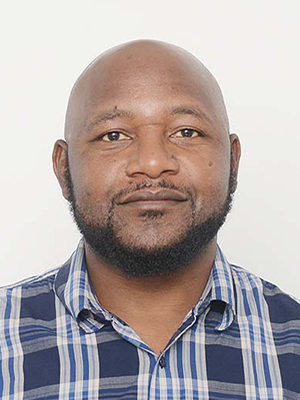
Prof. Simbarashe Gugurume
Prof. Simbarashe Gugurume
Simbarashe Gukurume is a social scientist whose work lies at the intersection of Sociology and Social Anthropology. Currently serving as a senior lecturer at Sol Plaatje University. Simbarashe's research interests revolve around the overarching theme of youth subjectivities and their intricate connections with various aspects of everyday life, including politics, livelihoods, and transitions. His scholarly pursuits delve into the broader realms of the political expressions of youth in the midst of enduring economic and political crises. His research interests collectively contribute to an overarching theme of youth subjectivities and how these intersect in complex ways with various aspects of everyday life such as politics, livelihoods, and transitions. Simbarashe is also interested in questions around informality, religiosity, displacement, youth political expressions in spaces of protracted economic and political crisis. He is also an NRF-rated Y1 researcher. Simbarashe is a recipient of the African Peacebuilding Network Research Fellowship (2021-2022) by the Social Sciences Research Council (SSRC), the African Humanities Programme Fellowship, from the American Learned Societies, Carnegie Corporation, New York, USA. Simbarashe’s recent publications are published in African Affairs, the International Journal of Transitional Justice, African Security Review, African Identities, Political Psychology and the Extractive Industries and Society among other journals. Simbarashe also serves as an editorial board member of Anthropology Southern Africa and the journal of Religion and Development.
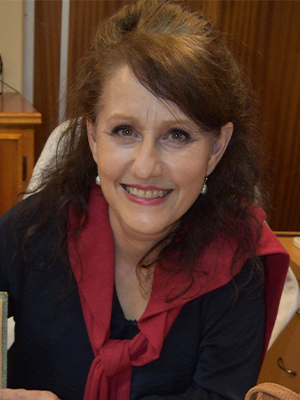
Adri Jansen
Adri Jansen
I have 40 years combined experience in the public, corporate, information technology, consulting, and academic sectors. I started my professional career at Price Waterhouse and progressed to Knowledge Management and Systems Architecture and Design at the De Beers Diamond Exploration Archive, business and information technology and knowledge, and project management consulting at Rubico and Information and Knowledge Management in the academic sector and more specifically digital archiving of indigenous heritage preservation materials across all mediums (art, manuscripts, music, rocks, etc.).
I have a unique skills set, developed from the international liaison experience I gained at Price Waterhouse combined with the IT and digital archiving systems I built for De Beers, which were both determining factors that led to my expertise in digital archiving of heritage preservation collections, today. Combine that with the project management experience gained during my 7-year sojourn in the IT world and sales experience, which equipped me with the necessary negotiation skills.
Dr Musara Lubombo
Dr Musara Lubombo
Dr Musara Lubombo is a Senior Lecturer and Deputy Director in the School of Communication at North-West University. His research focuses on strategic and development communication as well as scholarship of teaching and learning. He supervises postgraduate research and regularly facilitates methodological workshops, with expertise in qualitative thematic analysis.
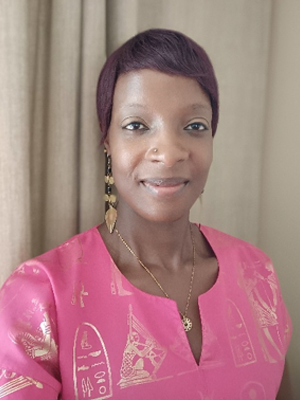
Dr Faith Mabera
Dr Faith Mabera
Dr Faith Mabera is an expert in international relations and international security. She is currently a post-doctoral fellow at the University of the Witwatersrand in Johannesburg, working on policy-related work centred on the Polycrisis. She previously served as a Senior Researcher at the Institute for Global Dialogue, where she oversaw the Foreign Policy Analysis programme. Her expertise spans foreign policy analysis, regional and international peace and security issues, norms dynamics in international relations, political and security risk analysis and global governance. In addition to contributing to several peer-reviewed journals and book editions, she is a regular commentator on media platforms covering foreign policy issues, geopolitical trends, and international relations across Africa and the world.
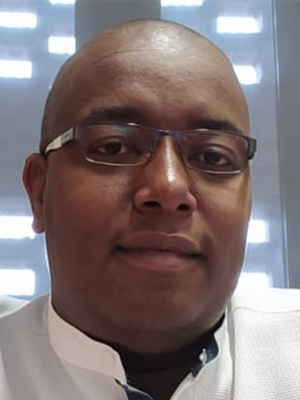
Prof. Mfundo Mandla Masuku
Prof. Mfundo Mandla Masuku
Mfundo Mandla Masuku is an Associate Professor of Development Studies at the University of KwaZulu-Natal. He serves extensively on college and university committees. He specialises in the intersection of African philosophy and governance. Part of his substantive research explores the Ubuntu philosophy and its application in contemporary community-driven projects to provide essential services. In the process, critically challenging Western paradigms with African indigenous knowledge systems. Masuku also contributes to the South African government’s strategic agenda to build a developmental state through research in partnership with public institutions.
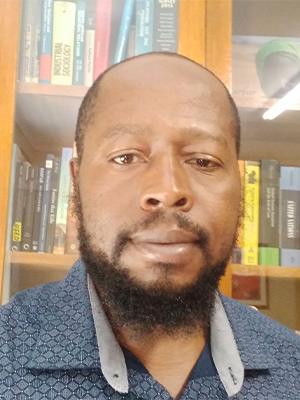
Dr Bathromeu Mavhura
Dr Bathromeu Mavhura
Dr Bathromeu Mavhura is a Postdoctoral Research Fellow at the Centre for Geopolitical Security and Strategy (CGSS). He holds an MA and PhD in Political Science from Stellenbosch University. His research focuses on armed conflicts in Africa, global security challenges, and the involvement of external actors in contemporary conflicts.
Title: The Fracturing of Geopolitical System: Causes and Effects
The fracturing of the post–Cold War multilateral order reflects resurgent great-power competition, transactional diplomacy, and deepening economic dependencies that weaken international institutions and contest global norms. Drawing on realism and dependency perspectives, this paper argues that rivalry among the United States, China, and Russia accelerates the erosion of multilateral capacity, most visibly in the UN Security Council, by substituting ad hoc coalitions and bilateral deals for collective action. Empirically, the study employs comparative case analysis of the Russia–Ukraine war, US–Israel–Iran tensions, and African sites of contestation (the Democratic Republic of Congo’s critical-minerals politics and Russian private military activity in the Sahel), supported by policy documents and elite interviews. Findings show that transactional partnerships (infrastructure-for-influence, security-for-resources) intensify African states’ strategic dilemmas, deepen economic dependency, and constrain regional responses. This raises critical questions: Can the fracturing of the post-Cold War multilateral order create opportunities for economic, diplomatic, and security cooperation in Africa? How do transactionalism and declining multilateralism influence Africa’s strategic choice? The paper concludes that while geopolitical fracturing raises risks, Africa can mitigate harms through strengthened regional governance, diversified partnerships, and improved resource transparency, measures that preserve agency amid a more fragmented international system.

Dr Naledi Modise
Dr Naledi Modise
Democracy at a crossroads-remembering the past to chart the future
This presentation reflects on the development of South Africa’s democracy using Lindberg’s pioneering work on the electoral route to democratization, which underscores the significance of repeated elections in advancing democracy in Africa. Lindberg (2008) argued, regular elections enhance democratic quality. Therefore, this presentation has three interrelated objectives. Firstly, it considers the role of elections in institutionalising and consolidating democracy in South Africa. Secondly by adopting this minimalistic outlook of democracy this presentation examines the impact of electoral institutions on voter turnout. Finally, with this explicit focus on elections and electoral institutions it seeks to make recommendations on the future of South Africa’s democracy in an evolving global political system.
Bio
Naledi is a Lecturer of Political Science at the NWU-Mafikeng Campus. She holds a PhD Political Science from the University of Pretoria. Furthermore, she is a Political Analyst who regularly provides commentary on local politics in the country. Naledi’s research interests are on democracy, voter behaviour and elections in South Africa.
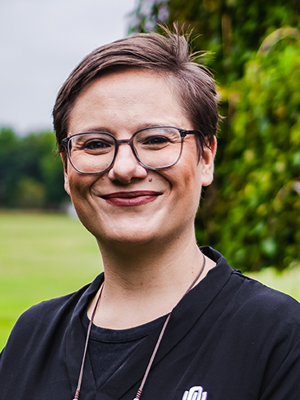
Prof. Janelize Morelli
Prof. Janelize Morelli
Janelize Morelli is the director of the NWU Centre for Digital Humanities. As a scholar, she works at the intersection of community and participatory arts and the digital humanities. Janelize is currently interested in understanding how artists can use technology to affect social change.
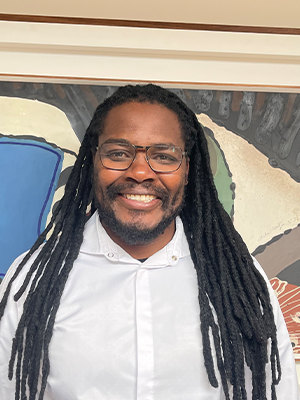
Prof. Blessed “Bee”Nhlanganiso Ngwenya
Prof. Blessed “Bee”Nhlanganiso Ngwenya
Prof. Blessed “Bee”Nhlanganiso Ngwenya is an Associate Professor and Director of the Optentia Research Unit at North-West University, where he leads work at the intersection of inclusion, decolonial praxis, human flourishing and institutional transformation. He holds a DPhil in Socio-Legal Studies from the University of Oxford, and his scholarship is grounded in questions of power, representation, justice and the rehumanisation of those historically marginalised by colonial and modern systems. His work spans decolonial theory, diversity and inclusion, media representation, the capability approach, higher education transformation and qualitative methodologies. He is the author of Media Power and Hegemony in South Africa: The Myth of Independence and has published widely on coloniality, identity, social justice and public discourse. As part of his academic citizenship, he serves as Associate Editor of the International Journal of Qualitative Methods, contributing to the advancement of rigorous, inclusive and globally engaged qualitative scholarship.In addition to his academic work, Prof. Ngwenya is deeply involved in community-engaged scholarship, including projects that address dignity, educational inequality and the lived realities of vulnerable communities. At the heart of his work is a commitment to moving diversity beyond representation alone, towards structural change, epistemic justice and the creation of institutions where people are not merely included, but recognised, valued and enabled to flourish.

Prof. Barend Prinsloo
Prof. Barend Prinsloo
Prof Barend L. Prinsloo is Director of the Centre for Geopolitical Security and Strategy at North-West University, based on the Potchefstroom campus. He holds a PhD in Political Studies and works in security studies, geopolitics, international security, counter-terrorism and transnational organised crime. Before leading the CGSS, he served as NWU Programme Leader in International and National Security and worked as a United Nations political affairs officer, and security coordination officer. His recent work includes security training, geopolitical risk assessment and the development of a Geopolitical Risk Management model for comparative state-risk analysis.
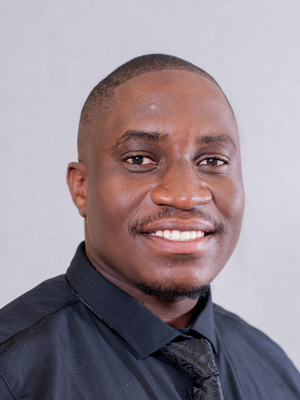
Prof. Benjamin Rapanyane
Prof. Benjamin Rapanyane
Prof. Benjamin Rapanyane is a Research Associate Professor in the Afrocentric Governance of Public Affairs: North West University. He is also a permanent academic member of the University’s Institutional Forum (2025-2027). Editorial Board Member of the African Journal of Peace and Conflict Studies and Associate Editor of Jurnal Trias Politika.

Prof. Ian Rothmann
Prof. Ian Rothmann
Ian Rothmann is a Professor of Industrial Psychology, holding an MCom (1986) and PhD (1996) in the field. He has supervised 78 doctoral and 148 master’s graduates, authored 300 peer-reviewed articles and chapters plus five books, and holds a B1 rating from the National Research Foundation.
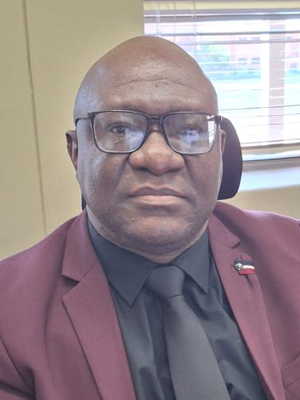
Prof. Abiodun Salawu
Prof. Abiodun Salawu
Abiodun Salawu is Professor and Director of the Indigenous Language Media in Africa at the North-West University, South Africa. He has enjoyed fellowships at universities in United Kingdom, Tanzania, Ethiopia, Papua New Guinea and Sweden. Abiodun is a fellow of the Nigerian Academy of Letters and a member of the Academy of Science of South Africa.
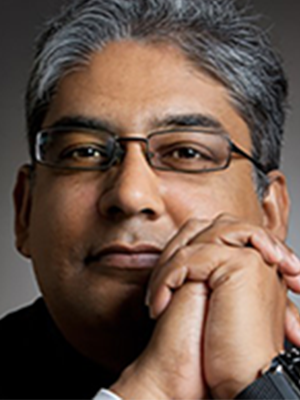
Prof. Hussein Solomon
Prof. Hussein Solomon
Professor Hussein Solomon is with the Centre for Gender and Africa Studies, UFS and Extraordinary Professor at CGSS, NWU. He is also a Visiting Professor at Osaka University and Senior Research Fellow at the Israel-Africa Relations Institute. His research interests focus on issues of peace and security in Africa as well on the evolution of the African State. His most recent books include Africa's External Engagement: Challenges and Opportunities (Palgrave Macmillan, 2026) and Radical Islam in the Sahel: Origins, Trajectories and the Failure of Counter-Terrorism (Springer, 2026).
South Africa is in crisis. The millions of unemployed, dilapidated infrastructure and spiralling crime rates together with social unrest are testimony to this. What hope can democracy provide for those who lost all hope? A ballot cannot be transformed into a slice of bread to satiate hunger nor a brick towards building a home. Our current political system is not working for the majority of its citizens. The truth is that political freedom has not accompanied economic development. This presentation will explain what needs to be done and when democracy in the liberal sense could take root to ensure a peaceful and prosperous polity.

Prof. Chris van Rhyn
Prof. Chris van Rhyn
Chris van Rhyn (PhD, Stellenbosch) is an Associate Professor of Music Theory and Composition at NWU and is the Director of the focus area Research and Creative Outputs in Visual Arts and Music (ViAMUS). In addition to being a music theorist and composer, Chris supervises master’s and doctoral students.
Prof Yanga Zembe
Prof. Yanga Zembe
Researching Sensitive Topics: Ethics, Care, and Reflexivity in Marginalised Contexts
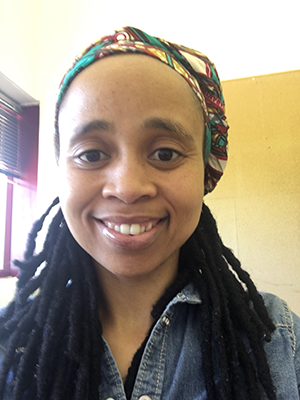
Prof Yanga Zembe is an Associate Professor in the discipline of Community Development in the School of Social Sciences at the University of KwaZulu-Natal (UKZN). She holds a PhD in Public Health from Karolinska Institute (Sweden). Prof Zembe is a seasoned researcher in the social sciences. Her research examines the influence of structural factors such as poverty, gender, and wealth inequalities on development and health outcomes. In recent years, Prof. Zembe has focused on decolonial research methods, specifically participatory action research (PAR). In addition to conducting PAR studies, Prof Zembe trains, mentors, and supports universities and research organizations that use participatory research methods in South Africa and abroad. She has also developed PAR curricula that support disenfranchised community groups to engage in bottom-up critical reflection, problem-solving, and action planning. In addition to her research and teaching responsibilities, Prof. Zembe serves as the acting Head of Community Engagement at UKZN's School of Social Sciences. She also serves on two boards that provide funding to community development projects in South Africa, namely the DG Murray Trust and the Letsatsi Solar Park Trust, and on the board of Community Engagement South Africa as a board director.

Prof. John Ringson
Prof. John Ringson
Storying Lived Experiences: Narrative, Voice, and Representation in Inclusive Research
Professor John Ringson is an award-winning academic and social scientist with more than a decade of experience in research, teaching, policy engagement, and community development across Southern Africa. He is a Research Professor in the Population and Health Research Entity within the Faculty of Humanities at North-West University, where he leads interdisciplinary research and supervises postgraduate students in governance, development, and human rights. Recognised by the South African Association of Public Administration and Management (SAAPAM), Prof Ringson is a qualitative research specialist whose expertise spans child rights governance, social development, social policy, philanthropy, community development, gender studies, public governance, and public policy. His work is grounded in decolonial and rights-based perspectives that examine the role of policy and institutions in improving the lives of vulnerable populations. Prof Ringson has an extensive publication record, with more than 80 peer-reviewed journal articles and book chapters. He is the sole author of Challenges Facing Orphans and Vulnerable Children in Zimbabwe: Traditionalism Versus Contemporarism Perspectives (Springer Nature, 2025) and Rethinking Child Rights Governance and Well-Being in Southern Africa: A Decolonial Perspective (Springer Nature, 2026), and co-editor of Perspectives on Education in Zimbabwe: A Decolonial Paradigm (Cambridge Scholars, 2026). He also serves on several research governance structures at North-West University, including the Research, Innovation, Ethics and Higher Degrees Committee, BaSREC, and the Higher Degrees Executive Committee. As Principal Investigator of an internationally funded project on Dutch colonial slavery and its contemporary legacies, he continues to make significant contributions to scholarship on governance, social justice, historical memory, and sustainable development in Africa and beyond.